
| Drywall Screws | |
|---|---|
| Call Now | +91-909-974-5404 |
| +91-909-974-5404 | |
| Eligible Region | India |
| Product | Drywall Screws |
| Price | Ask For Price |
| Google Rating | (5/5) ★★★★★ |
When setting up drywalls — whether for home renovation, commercial interiors, or false ceilings — choosing the right drywall screws can make or break the quality, durability, and safety of the installation. As a trusted drywall screw manufacturer and supplier in India, Rfive India aims to help builders, contractors, and DIY-enthusiasts make smart choices every time. In this guide, we walk you through how to pick the correct drywall screw by focusing on size, length, thread type, and finish — so your drywall stays secure, neat, and lasts long.
Understanding Drywall Screws: What They Are and Why They Matter
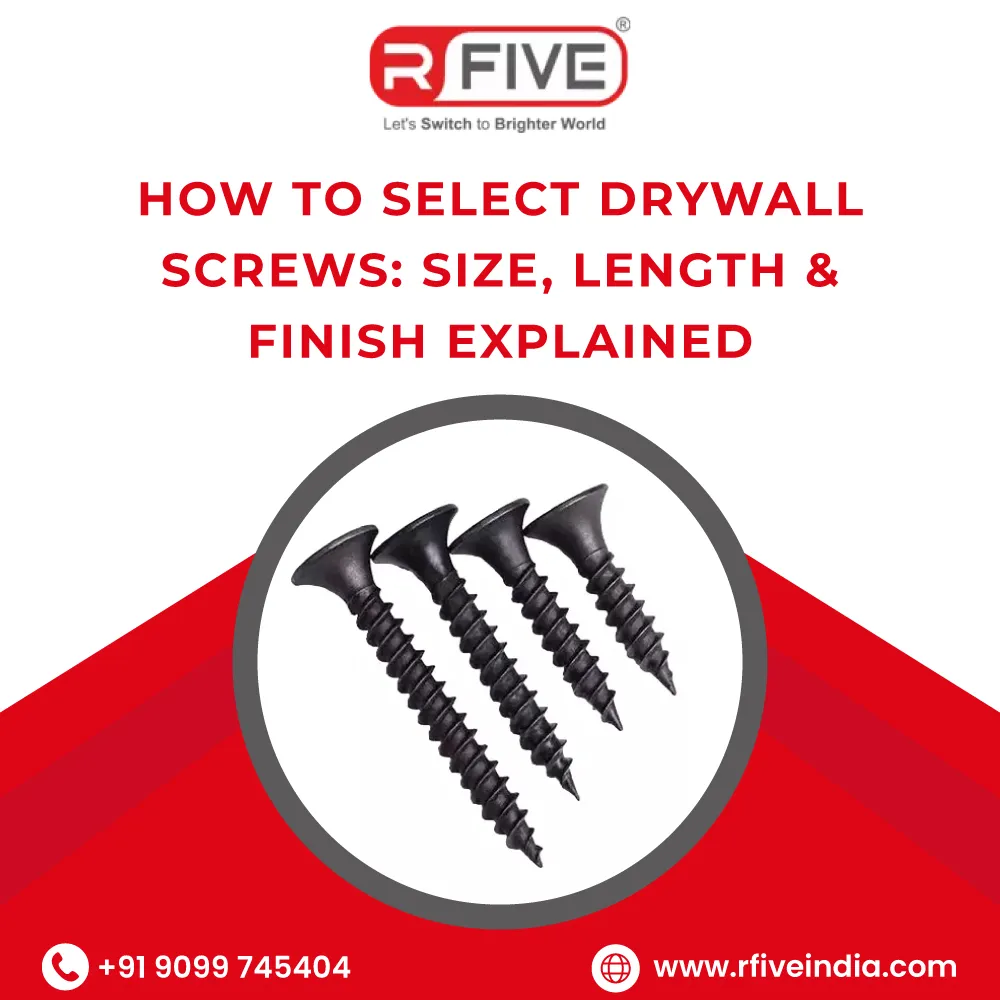
Drywall screws are specialized fasteners designed to secure gypsum boards (drywall sheets) to underlying stud frames — whether wood or metal. Unlike regular wood screws or nails, drywall screws have features tailored to drywall installation:
- A bugle-shaped head to sit flush with the drywall surface without ripping the paper layer.
- A sharp, often self-tapping tip (especially for metal studs) for clean penetration.
- Thread designs optimized for different stud materials: coarse threads for wood, fine threads for metal.
Using the right drywall screw is essential for structural integrity, long-term durability, and ensuring the drywall remains stable over time — no popping screw heads, no loose panels, no cracked joints.
Key Factors to Choose: Size, Length, Thread Type, and Finish
When selecting drywall screws, several interlocking factors influence the right choice. Let's break each one down.
1. Screw Length — Match to Drywall Thickness & Stud Material
The length of the screw is a critical parameter. If too short, the screw may not anchor deep enough into the stud and may loosen over time; if too long, it might pierce through the stud or penetrate beyond intended areas, causing damage or instability.
Here are some general guidelines used widely in drywall installations:
- For standard ½-inch (≈ 12.5 mm) drywall on wood or metal studs: a 1¼ inch (≈ 32 mm) to 1⅝ inch (≈ 38–40 mm) screw works well.
- For thicker 5/8-inch (≈ 15.9 mm) drywall, or for heavier load requirements (e.g. ceiling drywall or double-layered boards): 1⅝ inch to 2 inch (≈ 44–51 mm) screws provide better anchoring.
2. Thread Type: Coarse Thread vs Fine Thread — Match to Stud Material
Drywall screws typically come with either coarse (W-type) threads or fine (S-type) threads. The thread design directly impacts how well the screw grips the underlying material.
- Coarse-thread screws: The threads are wider and more pronounced, ideal for wood studs or timber framing. The larger thread pitch allows the screw to bite deeply into soft wood, giving strong grip and stability.
- Fine-thread screws: These have thinner, closely spaced threads and are best suited for metal studs or light-gauge steel framing. The fine threads create tight, secure engagement with metal, and often the screws are self-drilling to pierce the metal without pre-drilling.
3. Screw Gauge (Thickness) — Understanding #6 vs #8
Another important spec is the screw gauge, which denotes the shaft thickness. Most drywall screws come in #6 or #8 gauge.
- #6 gauge screws are thinner and often sufficient for standard drywall on metal studs or lighter wood framing.
- #8 gauge screws are thicker and offer stronger holds, which are useful for older, denser wood or heavier drywall loads.
4. Screw Finish & Coating — Durability and Corrosion Resistance
Drywall screws often come with special coatings or finishes — such as phosphate or zinc — which serve two main purposes:
- Prevent corrosion, especially in humid or damp environments.
- Provide a smoother shank that drives easier and holds joint compounds or paint more effectively after installation.
Common Mistakes & How to Avoid Them
Many drywalls installation issues stem from using the wrong screws. Typical mistakes and tips for avoiding them:
- Using coarse-thread screws on metal studs: This reduces grip and may strip the metal — always use fine-thread screws for metal.
- Using screws that are too short: They might not penetrate deep enough into studs, leading to weak hold or screws pulling out over time.
- Overly long screws: Excess length can punch through studs or hit unintended surfaces.
- Ignoring coating/finish: In humid environments, uncoated screws may rust, compromising structural integrity.
- Underestimating screw quantity or spacing: Proper spacing and quantity are vital for stable drywall — missing studs or poor spacing causes sagging or bulging over time.
Why Thread Type and Finish Make a Big Difference
Selecting the right thread type and finishing for drywall screws isn't just a technical detail — it defines how durable, stable, and maintenance-free your installation will be.
- Thread type impacts how securely the drywall anchors into the framing. Using coarse or fine threads appropriately ensures structural stability.
- Finish/coating affects resistance to moisture, corrosion, and environmental wear — essential in humid climates or wet areas.
Tips for Installation & Best Practices
To get the best performance from your drywall screws:
- Use a suitable screw gun or power screwdriver with depth adjustment to avoid over-driving and damaging drywall surface.
- Pre-check stud material (wood or metal) before selecting the screw.
- For ceilings, pick slightly longer screws for better grip, especially with heavier drywall boards.
- Maintain uniform spacing — adhere to recommended patterns for walls and ceilings to avoid sagging or bulging over time.
- If installing in damp or humid areas, always use coated screws to prevent rust or corrosion.
Why Choose Rfive India
Rfive India stands out as a drywall screw manufacturer and supplier in India with a comprehensive range of products that cater to diverse construction needs — whether for residential, commercial, or industrial projects. Our expertise ensures that whether you need coarse-thread screws for wood framing or fine-thread self-tapping screws for metal studs, we have the right stock. Our screws are available in multiple lengths, gauges, and finishes — giving you flexibility and reliability for any project. We focus on quality, durability, and compatibility with local construction standards, making us a dependable choice for builders and contractors across India. When you choose Rfive India, you choose consistency, longevity, and peace of mind for your drywall installations.
Conclusion
Choosing the right drywall screw involves more than grabbing the first pack off the shelf. It requires attention to screw length, gauge, thread type, stud material, and finish — all tailored to your specific project needs. Using a coarse-thread screw for wood studs with standard ½-inch drywall, a fine-thread self-tapping screw for metal studs and ensuring proper screw length and corrosion-resistant finish can make a significant difference in stability, durability, and appearance. With such careful selection and attention to detail, your drywall installation will remain strong, safe, and professional over the years. As a drywall screw manufacturer and supplier in India with extensive product options and expertise, Rfive India helps you get it right the first time.
Call us today to know more about drywall installation– +91 9099745404 or email ratnakarratnamaniindustries@gmail.com.